Product details
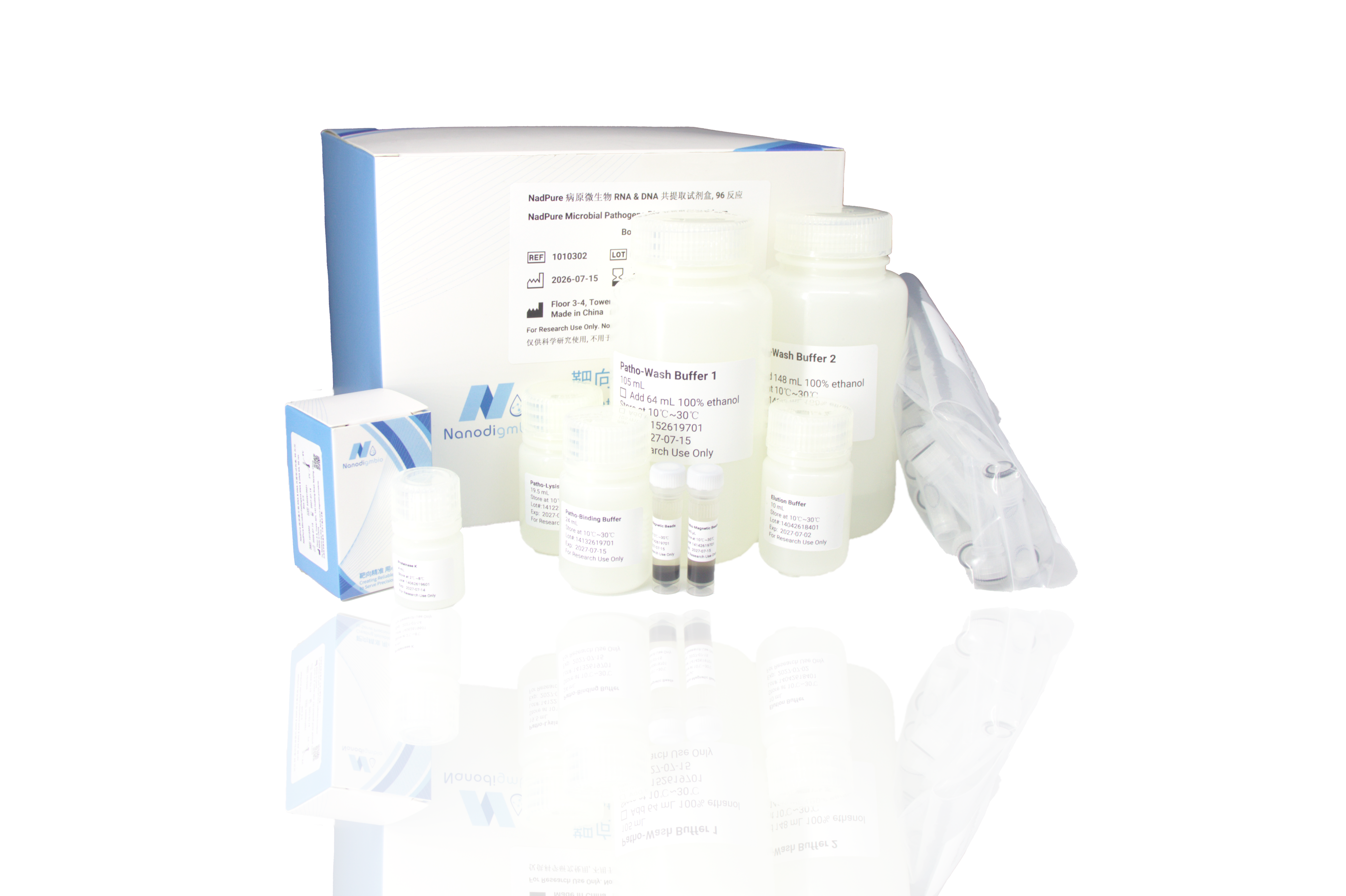
NadPure Microbial Pathogens RNA & DNA Kit
#1010302
- Product Details
- Kit Content
- FAQ
- Ordering Information
- Resources
Feature
Workflow
Performance
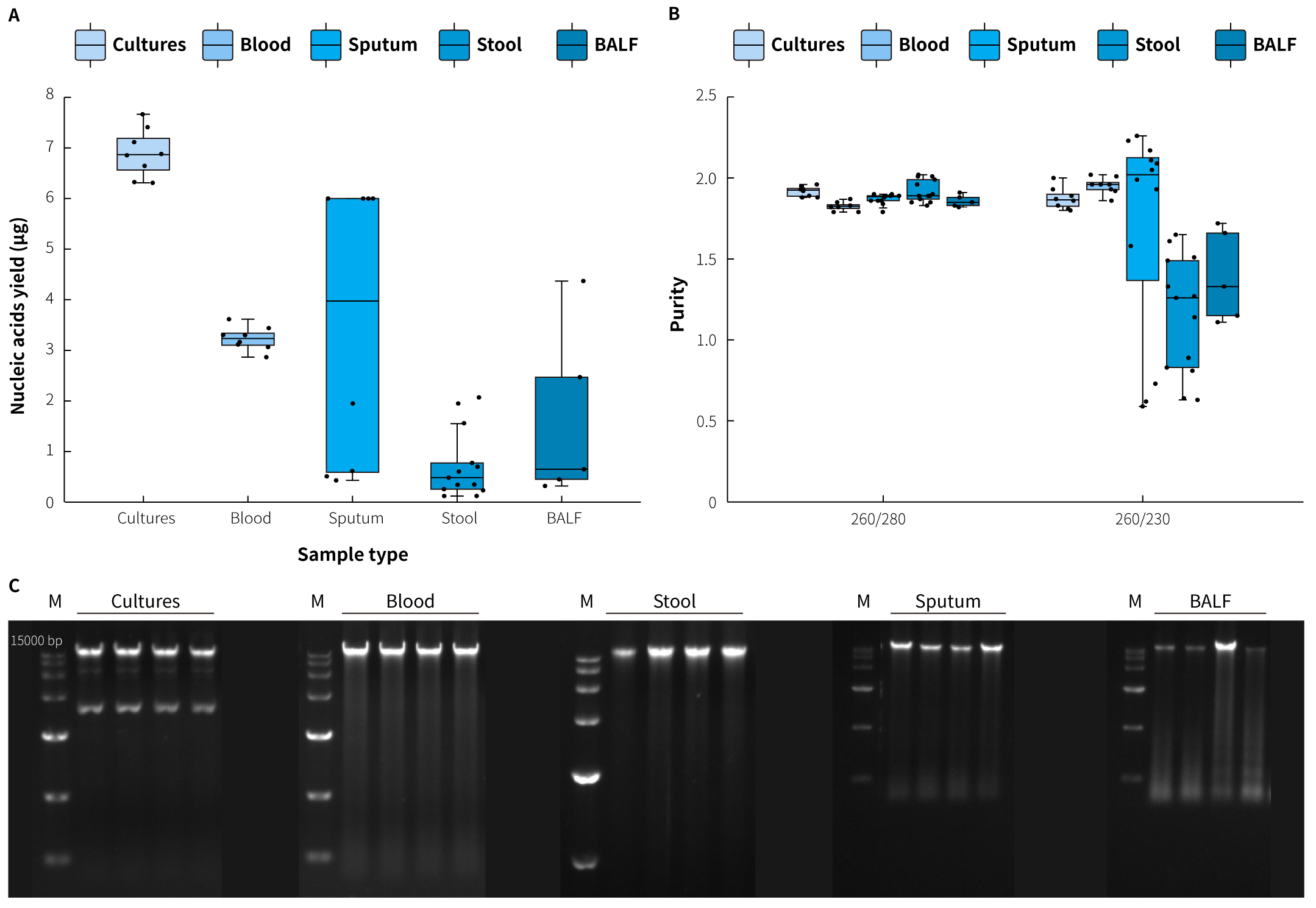
Broad Compatibility with Clinical Infectious Samples from Diverse Sources
Enhanced Lysis Promotes Efficient Nucleic Acid Release from Hard-to-Lyse Pathogens
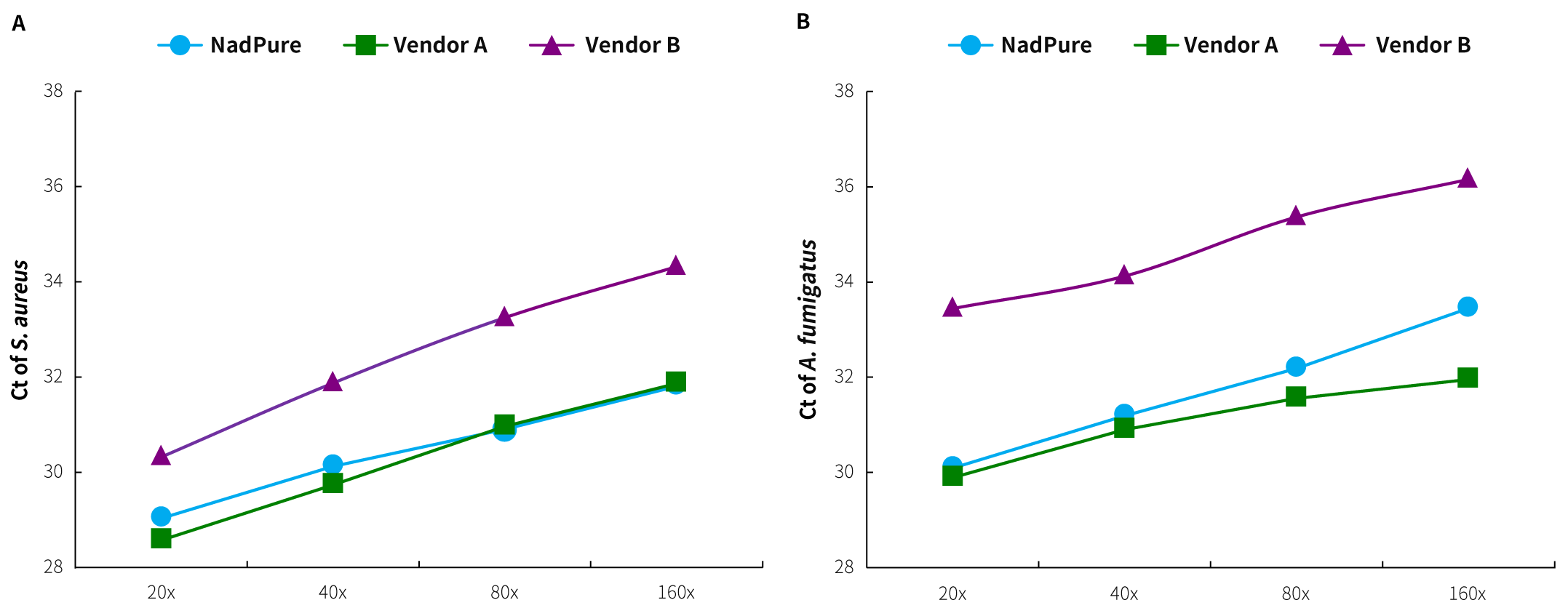
Figure 2. Enhanced lysis with the NadPure Microbial Pathogens RNA & DNA Kit promotes nucleic acid release from hard-to-lyse pathogens under low-pathogen-load conditions.A. S. aureus; B. A. fumigatus. The NadPure Microbial Pathogens RNA & DNA Kit (NadPure), Vendor A, and Vendor B were used to co-extract RNA and DNA from microbial reference materials containing S. aureus and A. fumigatus at known viability levels, following serial dilutions of 20-fold, 40-fold, 80-fold, and 160-fold. Subsequently, 2 μL of each nucleic acid extract was used for qPCR analysis.
Efficient, High-Quality Extraction Enables Sensitive Detection of Multiple Pathogens
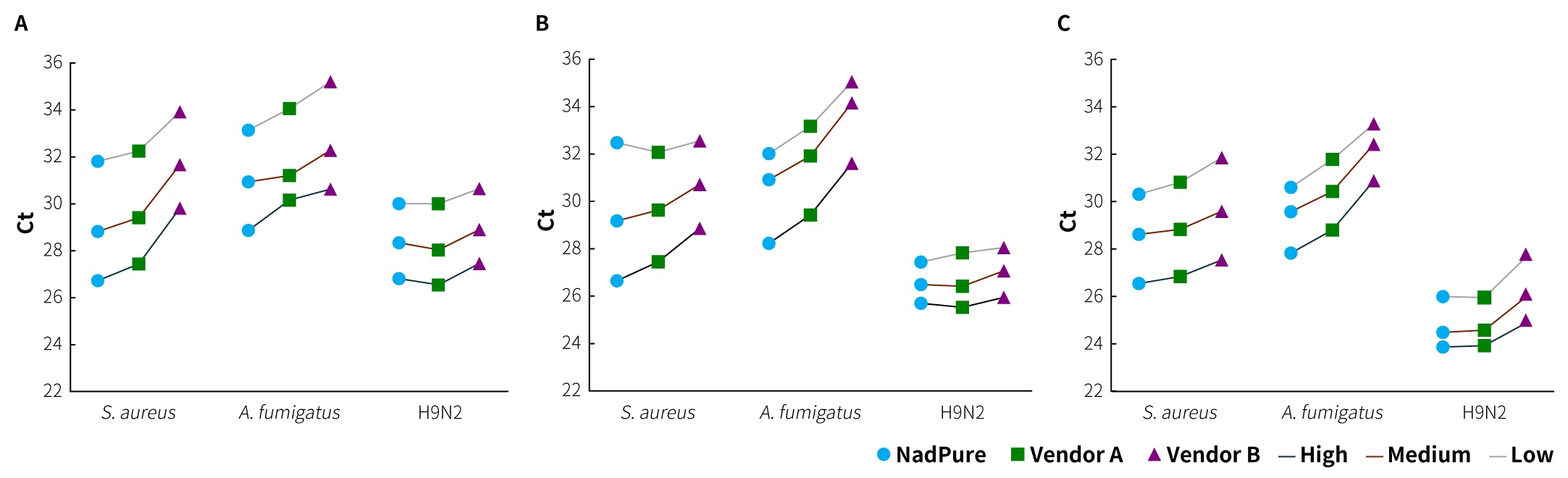
Figure 3. Comparison of nucleic acid extraction performance across multiple pathogens in simulated clinical samples using different magnetic bead-based co-extraction kits.A. Plasma; B. Swab; C. Sputum. Simulated clinical samples were prepared using serially diluted microbial reference materials, including S. aureus, A. fumigatus, and Influenza A virus H9N2, with known viability levels and/or copy numbers. Specifically, 5 μL of microbial reference materials diluted 10-fold (High), 40-fold (Medium), and 160-fold (Low) were separately added to plasma, swab, and sputum samples. NadPure, Vendor A, and Vendor B werethen used to co-extract RNA and DNA from the simulated samples. Subsequently, 2 μL of each nucleic acid extract was used for qPCR analysis.
Whole Process Monitoring of Exogenous Background Microbial Contamination
Table 1. Evaluation using an in-house database demonstrates low levels of residual background microbial contamination in the NadPure Microbial Pathogens RNA & DNA Kit.
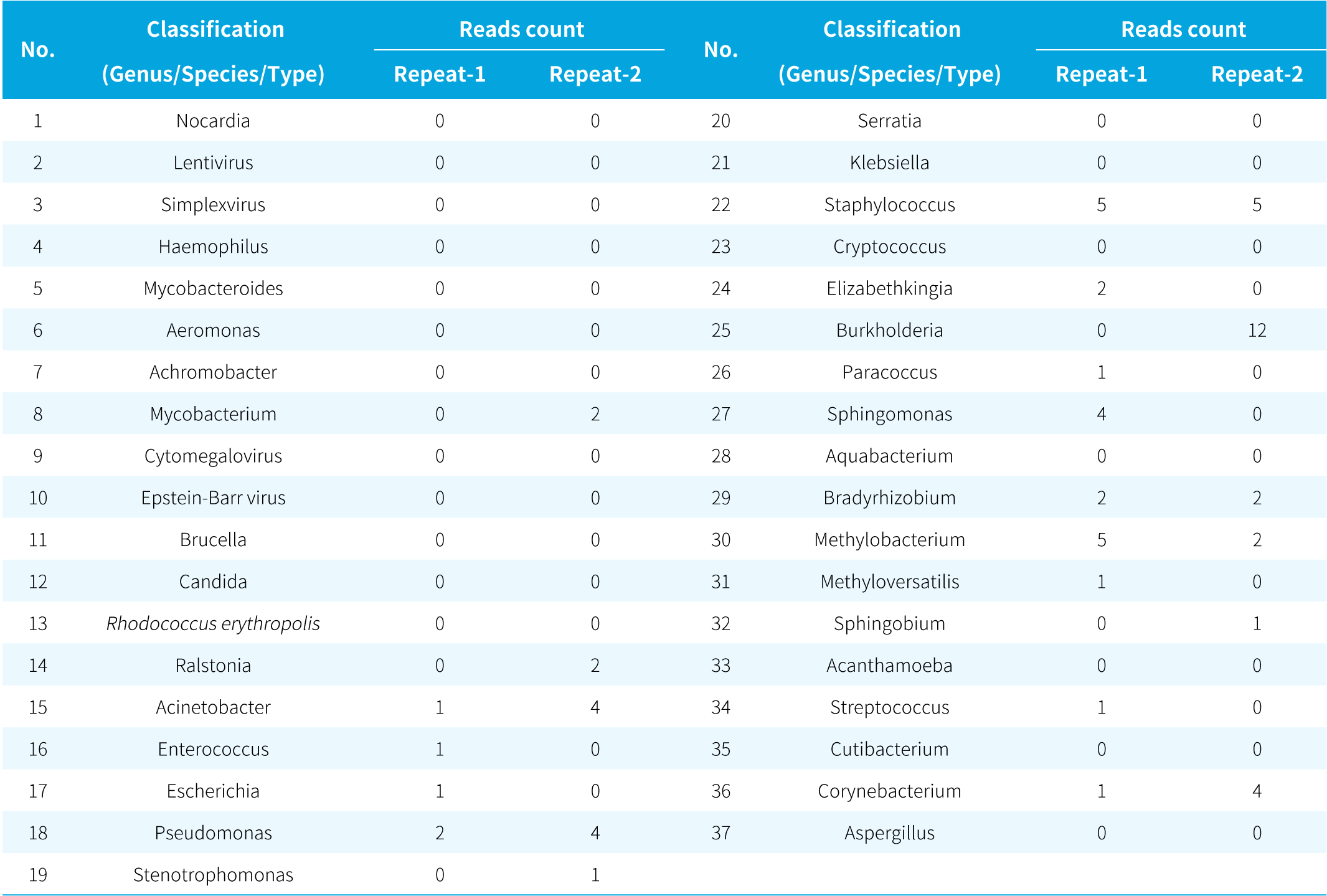
10 ng Human Genomic DNA Standard (Promega, G1521) was added to 400 μL of Nuclease Free Water to prepare simulated negative control samples. The NadPure Microbial Pathogens RNA & DNA Kit was used to co-extract RNA and DNA from the simulated samples. The resulting nucleic acids were then used for metagenomic sequencing library preparation with the NadPrep EZ RNA & DNA Library Co-Preparation Kit. Sequencing was performed on the NovaSeq 6000, PE150, generating 1 Gb of data.
Reliable Performance in Addressing the Challenges of Complex Infection Samples
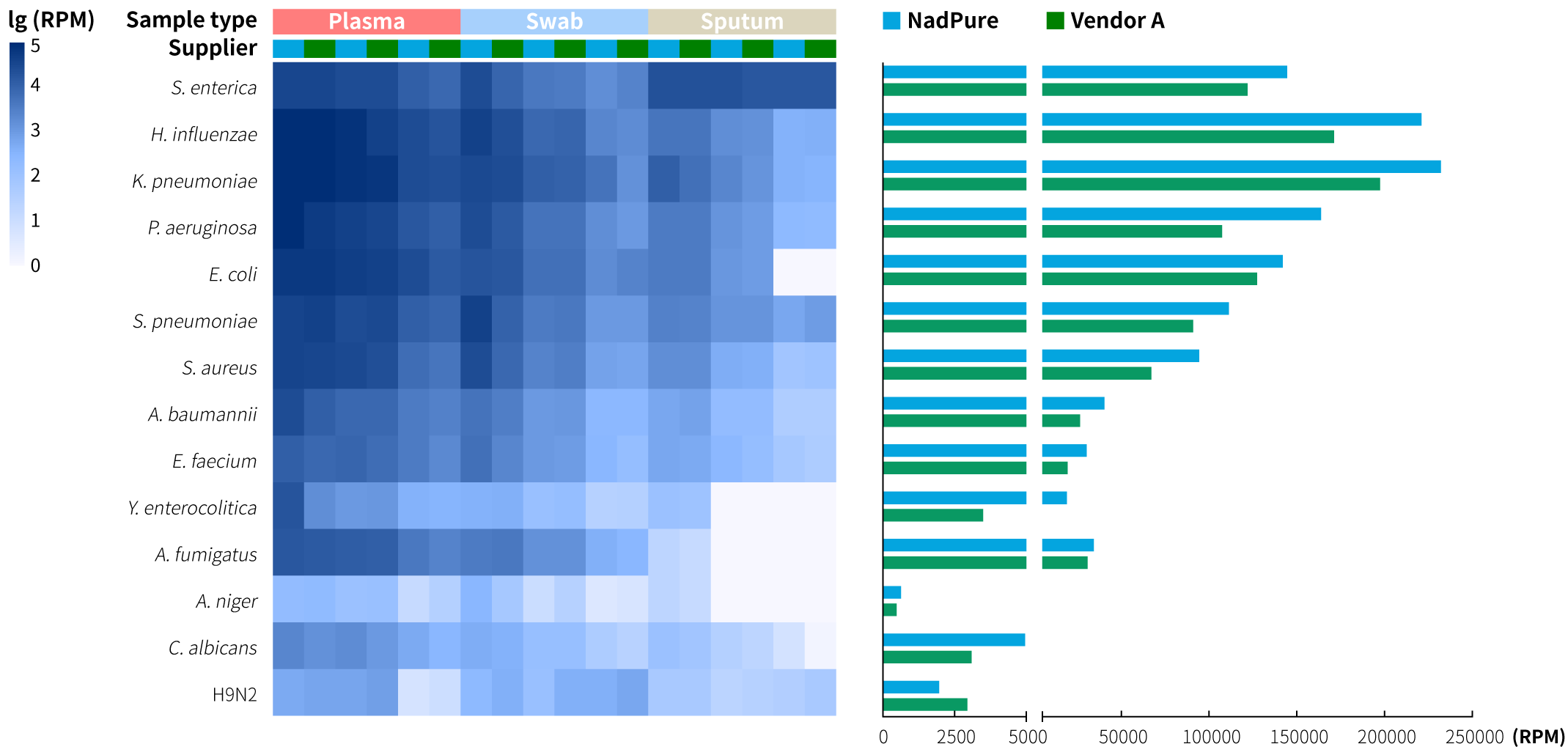
Figure 4. Comparison of tNGS detection performance for different magnetic bead-based co-extraction kits using simulated complex clinical sample.Simulated complex clinical samples were prepared using serially diluted microbial reference materials, including plasma, swab, and sputum samples, with three independent samples for each sample type. The NadPure Microbial Pathogens RNA & DNA Kit and Vendor A were used to co-extract RNA and DNA from the simulated samples. The extracted nucleic acids were then used for pre-library preparation with the NadPrep EZ RNA & DNA Library Co-Preparation Kit, followed by hybrid capture using the μCaler HyperMix Hybrid Capture Kit (for Illumina®) and the μCaler RIA Panel v1.0. Sequencing was performed on the NovaSeq 6000, PE150.
For research use only. Not for use in diagnostic procedures.
| Package | Color of Cap Tube | Component |
Volume 1010301 (24 rxn) |
Volume 1010302 (96 rxn) |
| Box1 |
/ |
Lysis & Grinding Tube | 24 unit | 96 unit |
|
/ |
Patho-Lysis Buffer | 5 mL | 19.5 mL | |
|
/ |
Patho-Binding Buffer | 6 mL | 24 mL | |
|
|
Patho-Magnetic Beads | 720 μL | 2×1,440 μL | |
|
/ |
Patho-Wash Buffer 1 | 25.5 mL | 105 mL | |
|
/ |
Patho-Wash Buffer 2 | 8 mL | 32 mL | |
|
/ |
Elution Buffer | 2.5 mL | 10 mL | |
| Box2 |
or / |
Proteinase K | 960 μL | 4 mL |
For research use only. Not for use in diagnostic procedures.
The kit is optimized for the co-extraction of RNA and DNA, and enables the simultaneous extraction of RNA and DNA from pathogens, including viruses, bacteria, and fungi, from the same sample. The final products are nucleic acids mixture. If only RNA or DNA is required for downstream applications, an appropriate nuclease treatment can be performed after extraction according to the specific experimental requirements. The treatment conditions should be established based on the downstream application and the nuclease manufacturer's instructions and validated experimentally.
Samples: Improper sample storage, repeated freeze-thaw cycles, or prolonged storage may compromise nucleic acid stability and reduce yield. It's recommended to store and handle samples according the conditions specified in this user manual, avoid repeated freeze-thaw cycles whenever possible, and prioritize the use of fresh samples. Special sample types should be pretreated as specified. For example, viscous samples (e.g., sputum) should be pre-liquefied according to their viscosity, while whole blood samples should be pretreated by adding an equal volume of 1X PBS or sterile saline. For the other sample types not listed in this user manual, please contact technical support (support@njnad.com) or use a validated pretreatment method. In addition, a low pathogen load in the sample may also result in low or undetectable nucleic acid yield. For these samples, extraction may be performed more than once, and a smaller elution volume may be used to increase the nucleic acid concentration.
Reagents: Precipitates in Patho-Lysis Buffer and Patho-Binding Buffer that have not fully dissolved may affect nucleic acid extraction performance. Inspect these reagents for precipitates prior to use. If present, heat the buffers in a water bath or dry bath at 56°C until the precipitates have completely dissolved. Vortex to mix thoroughly and allow them to equilibrate to room temperature before use.
Operations: 1) Insufficient sample lysis may result in incomplete nucleic acid release. Follow the lysis procedure specified in this user manual, ensuring thorough mixing and compliance with the specified lysis time and operating conditions. 2) Improper handling during washing may result in beads loss. When washing with Patho-Wash Buffer 1 (with absolute ethanol added) and Patho-Wash Buffer 2 (with absolute ethanol added), avoid aspirating or disturbing the beads. Dry the beads for approximately 5 min and avoid over-drying, as this may reduce subsequent nucleic acid recovery.
Temperature: If the actual temperature during lysis and incubation does not reach the set temperature, lysis efficiency may be affected. When using a water bath or dry bath, make sure the actual temperature has reached 56°C as specified in this user manual before incubation, and maintain the specified incubation time.
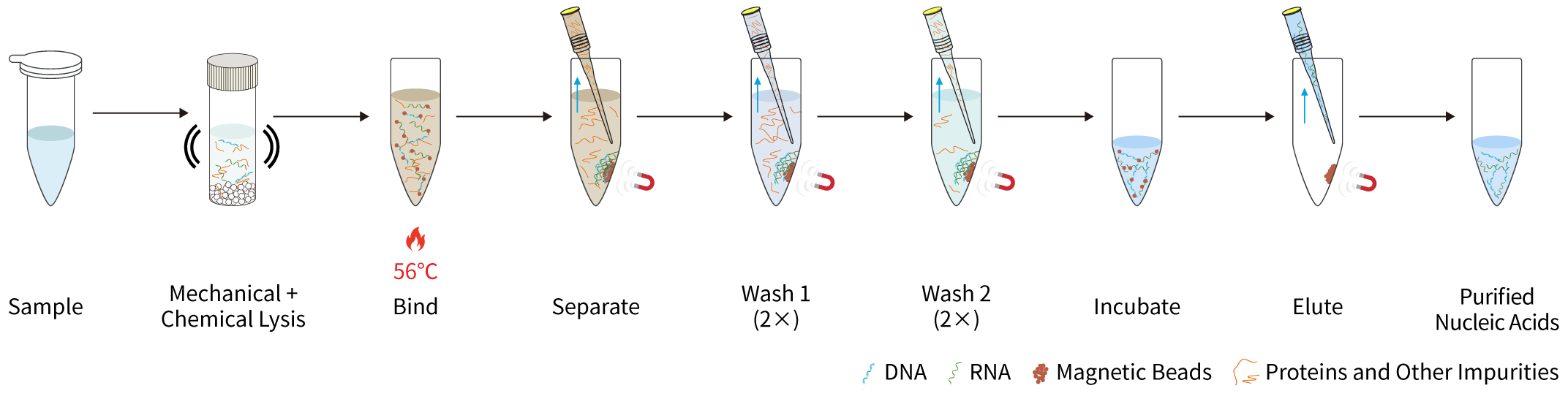
The kit combines mechanical and chemical lysis for sample processing and can be used to extract nucleic acids from micro-organisms with thick cell walls, including fungi (e.g., yeasts and Candida spp.) and Gram-positive bacteria. For these pathogen types, follow the specified lysis procedure to ensure efficient nucleic acid release. Actual extraction performance may vary with sample type, pathogen load, and sample handling etc.
Improper use of wash buffers: Failure to add absolute ethanol to Patho-Wash Buffer 1 and Patho-Wash Buffer 2 before their first use, as instructed on the bottle labels, or ethanol evaporation during use may compromise washing efficiency. For the initial use, the absolute ethanol should be added to Patho-Wash Buffer 1 and Patho-Wash Buffer 2 according to the volumes indicated on the bottle labels. Vortex to mix thoroughly and label the buffers before use. Tighten the caps promptly after use to prevent ethanol evaporation.
Insufficient washing or residual wash buffer: Failure to complete the specified washing steps or residual wash buffer remaining after magnetic separation may affect nucleic acid purity and subsequent experiments. Strictly follow the washing procedure specified in this user manual. After washing, perform magnetic separation and remove as much residual liquid as possible. Allow the beads to dry for approximately 5 min until the residual liquid has sufficiently evaporated before elution, while avoiding over-drying.
1) Insufficient nucleic acid yield: Low nucleic acid concentration may not meet the requirements of downstream applications. Check sample quality, pretreatment, lysis, beads binding, and elution. If necessary, interpret the results in conjunction with the internal, positive, or negative control results.
2) Poor nucleic acid purity: Residual wash buffer or other impurities in the elute may interfere with downstream applications. Ensure that wash buffers are prepared correctly, complete all required washing steps, and thoroughly remove residual liquid before elution.
3) Nucleic acid degradation: Improper sample storage, repeated freeze-thaw cycles, or nuclease contamination during the experiment may cause nucleic acid degradation. Store samples and purified nucleic acids as specified in this user manual and avoid repeated freeze-thaw cycles. Use nuclease-free consumables and reagents during the entire workflow, and take precautions to prevent DNase and RNase contamination.
4) Abnormalities or contamination during the workflow: Use appropriate internal, positive, and negative controls according to the specific downstream application to help determine whether the nucleic acid extraction and subsequent experimental procedures have proceeded as expected and to investigate potential contamination.
| Product | Catalog# |
|
NadPure Microbial Pathogens RNA & DNA Kit, 24 rxn |
1010301 |
|
NadPure Microbial Pathogens RNA & DNA Kit, 96 rxn |
1010302 |
Related products


Solutions
- Methyl Library Preparation Total Solution
- Sequencing single library on different platform--Universal Stubby Adapter (UDI)
- HRD score Analysis
- Unique Dual Index for MGI platforms
- RNA-Cap Sequencing of Human Respiratory Viruses Including SARS-CoV-2
- Total Solution for RNA-Cap Sequencing
- Total Solution for MGI Platforms
- Whole Exome Sequencing
- Low-frequency Mutation Analysis
Events
-
Overseas Exhibition Preview | Nanodigmbio Looks Forward to Meeting You at GENETICS 2026 in Moscow
-
Exhibition Preview | Nanodigmbio invites you to join us at Boston 2025 Annual Meeting of the American Society of Human Genetics (ASHG)
-
Exhibition Preview | Nanodigmbio Invites You to Join Us at WHX & WHX Labs Kuala Lumpur 2025, Malaysia International Trade and Exhibition Centre in Kuala Lumpur

-
Exhibition Preview | Nanodigmbio Invites You to Join Us at Hospitalar 2025, Brazil International Medical Device Exhibition in São Paulo

-
Exhibition Preview | Nanodigmbio invites you to join us at Denver 2024 Annual Meeting of the American Society of Human Genetics (ASHG)
-
Exhibition Preview | Nanodigmbio invites you to join us at Sapporo 2024 Annual Meeting of the Japan Society of Human Genetics (JSHG)

Nanodigmbio will contact you within 1 day.
If there are any problems, please contact us by 400 8717 699 / support@njnad.com